What an experiences API is, how it differs from an activities API, and the features to check before you integrate tours into your booking platform.
What is an experiences API?
An experiences API, also called a tours and activities API or a things-to-do API, lets a booking platform pull bookable tours, activities, attraction tickets and transfers from a supplier, check live availability and confirm bookings without the customer leaving your site.
Instead of copying product details and prices from a supplier's extranet by hand, your website, app or CRM asks the API and shows the answer as it is right now.
Experiences API vs activities API: is there a difference?
Mostly in the name. Suppliers and marketplaces use "experiences", "activities", "things to do" and "tours and activities" for the same kind of product: something a traveller does at the destination, sold by date and often by time slot.
What really differs between providers is coverage (day tours, attraction tickets, transfers, multi-day trips) and depth. Some APIs only return listings and send customers elsewhere to pay. Others support live availability, booking, amendments and cancellations end to end. Compare providers on those capabilities, not on the label.
How one booking moves through the API
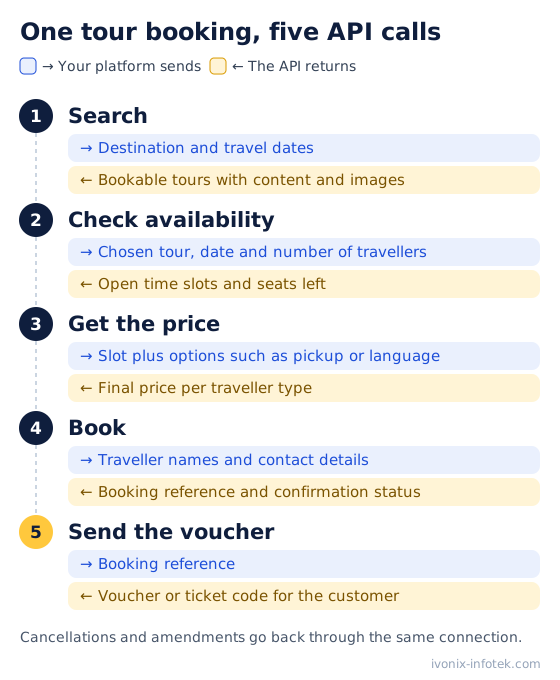
Most experiences APIs follow the same five steps. Your platform searches products for a destination and dates, checks availability for the chosen tour and number of travellers, gets the final price with options such as pickup or language, creates the booking with traveller details, and receives a voucher or ticket code to send to the customer.
Cancellations and amendments go back through the same connection, which is why it matters that the API supports them rather than leaving you to email the supplier.
Features a tours and experiences API should include
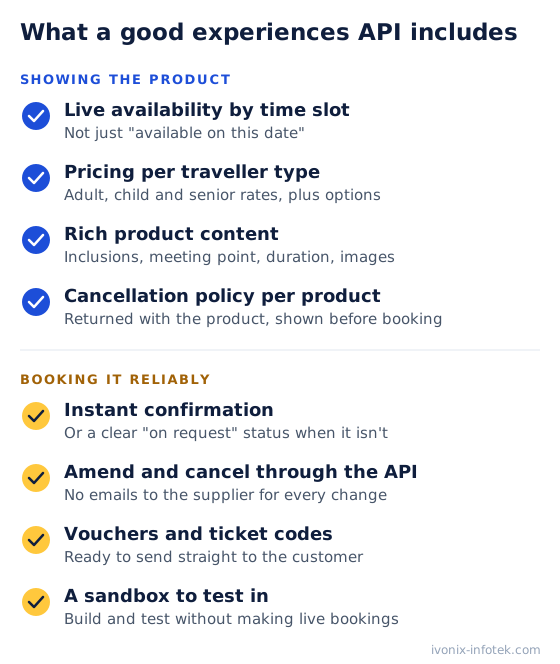
For showing the product: live availability by time slot, pricing per traveller type with options, rich content (inclusions, meeting point, duration, images) and the cancellation policy for each product, so customers see it before they pay.
For booking it reliably: instant confirmation, or a clear "on request" status when a supplier confirms manually; amendments and cancellations through the API; vouchers or ticket codes you can pass straight to the customer; and a sandbox environment so you can build and test without making live bookings.
Questions to ask before integrating tours into your booking platform
How are rates returned: as net rates with your markup applied in your own system, or as a fixed retail price? How often does product content change, and should you cache it or fetch it live? What happens if a booking fails after the customer has paid? Does the supplier contact travellers directly, or do all messages come through you?
The answers decide how your checkout, markup rules and support process need to be designed, so get them before development starts.
Putting tours next to everything else you sell
An experiences API is most useful when its bookings land in the same place as the rest of the trip. In a travel CRM, a tour booked through the API can sit inside the customer's itinerary with its voucher, cost and margin, instead of in a separate supplier login.
That's how we approach travel API integration and our Tours & Activities Manager. For the wider case, read why API integration matters for travel businesses.